

 Call Us Now
 E-Mail Us Now
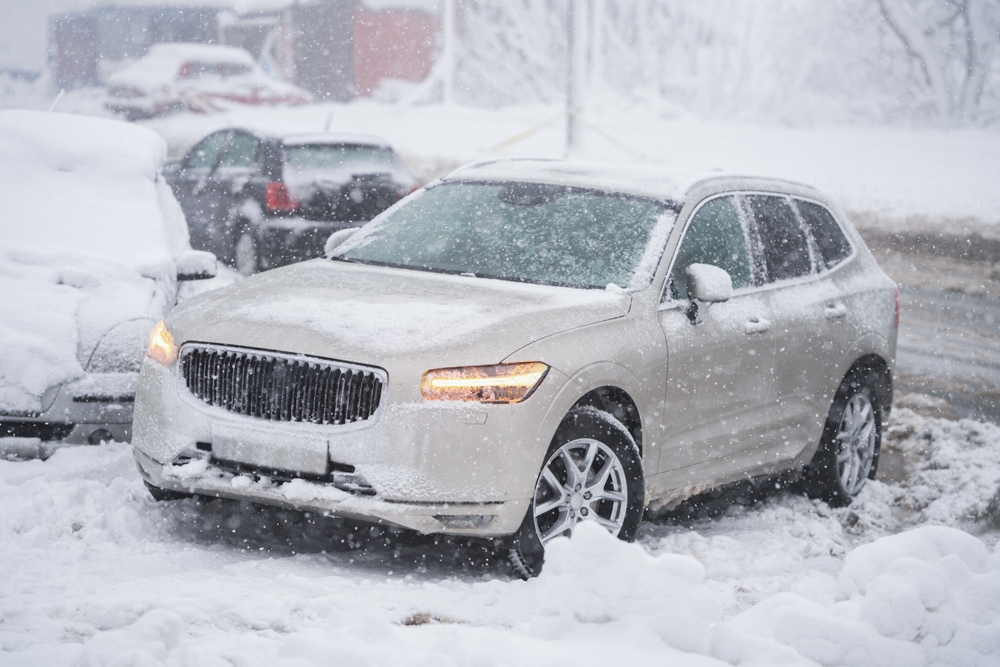
A car accident in the snow can feel unavoidable. Ice, slick roads, and poor visibility make winter driving dangerous across Washington, especially in Seattle and the surrounding areas. Still, snow and ice does not automatically excuse a driver from responsibility. Fault can still be assigned after a winter crash.
When insurance companies review a car accident in snow fault claim, they look closely at how each driver responded to the conditions. That includes speed, following distance, braking behavior, and vehicle preparedness. If another driver failed to adjust and caused your injuries, you may still have the right to seek compensation.
We regularly speak with people who assume nothing can be done because the weather is bad. In reality, winter weather raises the standard of care drivers are expected to follow. Understanding how fault works is the first step toward protecting your rights after a winter car crash.
Why Fault Still Matters in Winter Weather Accidents
Snow and ice do not remove a driver’s legal responsibility. Under Washington law, all drivers must operate their vehicles reasonably and safely based on current conditions. That duty does not disappear just because the road is icy.
Insurance companies will still assign fault even in unavoidable winter car accidents or “acts of God”. While severe weather plays a role, it does not override negligence.
Drivers are still expected to take precautions, such as:
- Reducing speed well below the posted limit
- Increasing following distance
- Braking earlier and more gently
- Using appropriate tires and properly maintained brakes
If a driver fails to adjust and causes a collision, fault can still be assigned even though snow or ice was present.
Washington also follows a pure comparative fault system. That means fault can be divided between multiple parties, and compensation is reduced based on each driver’s percentage of responsibility. If you were partially at fault, you may still recover damages tied to the other driver’s negligence.
Winter accidents often occur in predictable locations, including hills, intersections, and highways with heavy traffic. Many of these crashes overlap with areas where collisions already happen frequently, which we break down in our overview of where car accidents most often occur in Seattle.
Is Sliding on Ice Considered an At-Fault Accident?
In many cases, yes. Sliding on ice alone does not automatically excuse a driver from fault. Courts and insurers generally expect drivers to anticipate winter hazards and adjust their behavior accordingly.
When someone asks, “Is sliding on ice an at fault accident?” the answer depends on what led to the slide. A driver may be found at fault if they:
- Drove too fast for snowy or icy conditions
- Followed another vehicle too closely
- Failed to brake early or properly
- Had worn or inadequate tires
- Lost control before impact due to inattention
If a driver loses control and rear-ends another vehicle, that is often treated as an at-fault crash, even during a snowstorm. The reasoning is simple: winter conditions increase stopping distances, so drivers must leave more room and slow down.
That said, fault is not always one-sided. In some snow car crashes, both drivers may share responsibility. For example, one driver may have been speeding while the other stopped abruptly without lights. Under Washington’s comparative fault rules, each party’s actions are weighed.
If another driver’s choices played a role in your injuries, you may still have a valid claim, even if ice was involved.
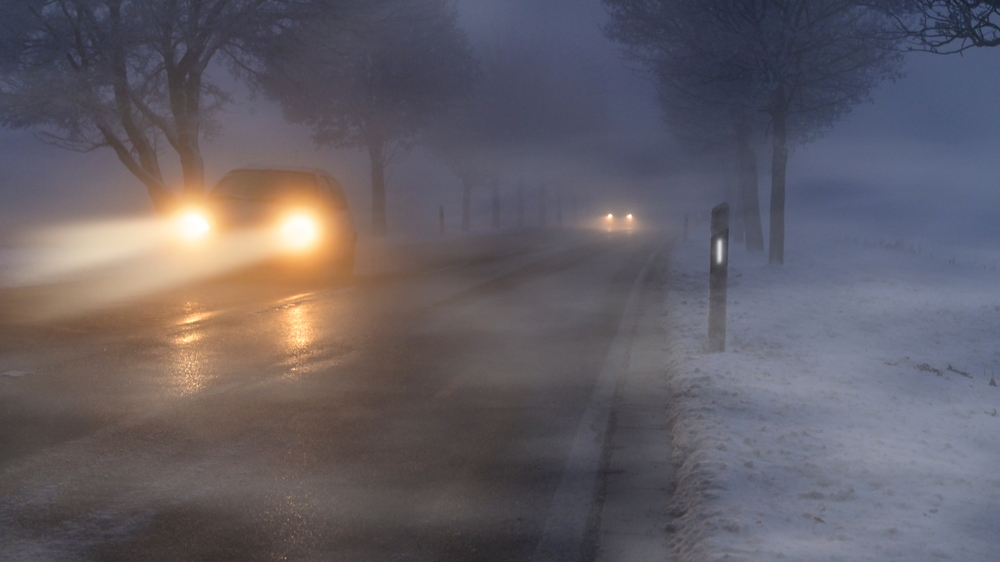
Common Causes of Winter Car Accidents in Washington
Winter driving accidents in Washington often stem from a combination of weather conditions and driver behavior. Snow and ice create hazards, but most winter crashes involve at least one driver failing to adjust appropriately.
Some of the most common causes of snow car crashes and ice accidents include:
- Black Ice
Black ice is nearly invisible and commonly forms on bridges, overpasses, and shaded roads. Drivers who do not slow down in areas prone to black ice are frequently found at fault after losing control.
- Sudden Snowstorms and Whiteout Conditions
Heavy snowfall can reduce visibility within minutes. Drivers are expected to slow down, turn on headlights, and pull over if conditions become unsafe.
- Brake Failure on Icy Roads
Slamming the brakes on ice often leads to skidding. Drivers are expected to brake earlier and more gently in winter conditions.
- Rear-End Collisions
Reduced traction increases stopping distance. Rear-end crashes during snowstorms are commonly considered preventable and often lead to fault being assigned to the trailing driver.
- Unplowed or Poorly Maintained Roads
Snow-covered roads can contribute to crashes, but drivers are still required to drive cautiously. Government liability may apply in limited situations, though these cases are more difficult to prove.
Even a minor snow car accident can result in serious injuries due to reduced control and multi-vehicle pileups. These winter car crashes are rarely treated as unavoidable by insurers when driver negligence is involved.
How Fault is Determined in Snow & Ice Crashes
Fault in a car accident in snow is determined by examining evidence, not just weather conditions. Insurance adjusters and attorneys look at what each driver did before the crash and how they responded to the road conditions.
Common types of evidence include:
- Police accident reports
- Dashcam or traffic camera footage
- Weather and road condition records
- Witness statements
- Vehicle damage and skid mark patterns
Each piece of evidence helps demonstrate speed, braking behavior, lane position, and overall vehicle control.
Washington’s pure comparative fault system plays a major role in winter accident claims. Fault can be split between drivers, and compensation is adjusted based on each party’s share of responsibility. For example, if one driver was speeding and another failed to use headlights, both actions may be considered.
Insurance companies often try to shift blame during winter driving accidents by pointing to weather conditions. That is why evidence is critical. Clear documentation can show that another driver failed to slow down, maintain control, or follow safely despite known risks.
Can You Get Compensation for a Snow-Related Crash?
Yes, you can still pursue compensation for a car accident in snow or ice if another party’s negligence contributed to the crash. Winter weather alone does not prevent an injury claim. What matters is how the drivers involved responded to the conditions.
If another driver failed to slow down, followed too closely, or lost control due to poor judgment, they may be held responsible for the damages you suffered. Even in winter driving accidents, insurance companies must evaluate fault based on conduct, not just road conditions.
Potential compensation in a winter car crash may include:
- Medical bills, including emergency care and follow-up treatment
- Lost wages and reduced earning capacity
- Vehicle repair or replacement costs
- Pain and suffering
- Long-term disability or impairment
If you were partially at fault, Washington’s comparative fault rules still allow recovery. Your compensation is reduced by your percentage of responsibility, not eliminated altogether. For example, if you were found 20% at fault, you may still recover 80% of your damages.
Government Liability for Snow and Ice Accidents
In limited situations, a city or state agency may share responsibility for a snow or ice accident. This can happen if a government entity fails to reasonably maintain roads, address known hazards, or follow established snow removal practices.
These cases are more complex than typical snow car crashes. Claims against government agencies involve stricter notice requirements, shorter deadlines, and higher standards of proof. Evidence must show that the agency knew, or should have known, of the dangerous condition and failed to act within a reasonable time.
Speak With a Seattle Car Accident Attorney Today
Winter driving accidents can leave you dealing with injuries, vehicle damage, and unanswered questions about fault. Snow and ice make crashes more complicated, but they do not take away your right to hold a negligent driver accountable. If someone failed to slow down, maintain control, or drive safely for the conditions, we can help you understand your options.
At Khan Injury Law, we help people across Seattle and the surrounding areas navigate car accident in snow fault claims. We have handled many injury cases involving dangerous road conditions, and our results reflect our commitment to protecting injured clients.
There is no cost to speak with us. Your consultation is completely free, and you do not pay any legal fees unless we recover compensation for you. If you were injured in a winter car crash and have questions about fault, compensation, or insurance, we are here to help you move forward with confidence.
Frequently Asked Questions
What if both drivers slid on ice?
When both drivers slide on ice, fault is usually divided based on each person’s actions leading up to the crash. Investigators look at speed, following distance, braking behavior, and vehicle control. Under Washington law, both drivers may share responsibility, and compensation is adjusted accordingly.
Will insurance cover a crash caused by black ice?
Insurance coverage depends on the policy and the facts of the crash. While black ice is a common factor in winter accidents, insurers still evaluate driver behavior. If another driver failed to adjust to known icy conditions, coverage may still apply for your injuries and vehicle damage.
Can I still sue if I was partially at fault?
Yes. Washington follows a pure comparative fault system. Even if you were partially responsible for a minor snow car accident, you may still pursue compensation tied to the other party’s negligence. Your recovery is reduced by your share of fault, not barred entirely.

